Finding a sunscreen that protects without irritating sensitive skin feels like an impossible compromise. Chemical filters sting, mineral formulas leave a white cast, and half the options on the shelf are loaded with fragrance that triggers redness within minutes. We tested mineral, chemical, and hybrid sunscreens on reactive skin types, evaluating protection level, irritation potential, white cast, texture under makeup, and reapplication ease, to find the formulas that genuinely work for people whose skin rejects most products.
Sun protection is just one layer of a sensitive skin routine. Pair your sunscreen with a gentle, barrier repairing moisturizer, our electric toothbrush guide and hair dryer picks round out your personal care essentials. If you store your skincare products in the bathroom where heat degrades active ingredients, a skincare fridge can extend the shelf life of your sunscreen and serums significantly.

Anthelios UV Pro Sport SPF 50 Sunscreen for Face & Body, Water & Sweat
La Roche Posay holds a 4.6 star average across 510 verified Amazon reviews. Ashe wrote: “This is an excellent product that absorbs quickly and leaves no chalky white or thick oily residue. UVA and UVB protection at spf 50.No detectable odors. Has an ingredient to help sand from sticking but I haven’t been…”
- High Endurance
- Invisible
- Advanced UVB Protection through Cell OX
- Formulated for No Dripping & No Staining
What we like
- High Endurance, Sweat & Water Resistent Sport Sunscreen for Body & Face: Specifically formulated for long lasting SPF 50 protection that…
- Invisible, Breathable & Non Greasy Daily Sunscreen for All Skin Tones: For a weightless, comfortable feel; Its invisible formula blends…
- Advanced UVB Protection through Cell OX Shield Technology: Our advanced Cell OX Shield Technology effectively blocks 98% of UVB rays while…
- Formulated for No Dripping & No Staining During Exercise: Non drop formula that won't run into your eyes while sweating. Plus, it won't…
Watch out for
- No common complaints in top verified reviews

100% Mineral Sunscreen SPF 30 with Zinc Oxide & Titanium Dioxide
CeraVe holds a 4.2 star average across 9,165 verified Amazon reviews. TheyCallMeMacGyver wrote: “One of the more reasonably priced options. It’s a mineral sunscreen. Don’t dab it all over and expect to double back and spread it out. Doesn’t work that way. Get it on and spread it as quickly as possible. It turns…”
- 100% Mineral based sunscreen
- Physical sunscreens can often leave a
- Oxybenzone free
- Ceramides are found naturally in the skin
What we like
- 100% Mineral based sunscreen, also known as a physical sunscreen, reflects UVA/UVB rays to help protect the skin. Formulated with titanium…
- Physical sunscreens can often leave a white cast when applied in thick layers. For best results, apply evenly to the entire body in thin…
- Oxybenzone free, avobenzone free, and benzene free, this sunscreen contains physical filters Zinc Oxide and Titanium Dioxide. Hawaii…
- Ceramides are found naturally in the skin and can become damaged with sun exposure. All CeraVe products are formulated with three…
Watch out for
- I bought this sunscreen only because we were going to St Croix and they require a mineral sunscreen on the island
- I struggle to find face sunscreen that doesn't irritate my eyes

Reef Safe Sunscreen SPF50 Hawaii 104 Reef Act Compliant Mineral
Thrive Natural Care holds a 4.5 star average across 1,617 verified Amazon reviews. theboot wrote: “Impressed. I was prepared to deal with some serious white cast given such a high mineral content. But this stuff rubs in almost undetectable after 30 seconds. Made me question if it would really be that effective. Been…”
- REEF SAFE SUNSCREEN 23
- SPF 50 BROAD SPECTRUM PROTECTION All
- NATURAL SPF PROTECTION SPF 50 Sunscreen
- EFFECTIVE HEALTHY INGREDIENTS No
What we like
- REEF SAFE SUNSCREEN 23.5% NON NANO ZINC OXIDE Minimal white cast, rubs in easy, faster absorption and less greasy compared to…
- SPF 50 BROAD SPECTRUM PROTECTION All natural mineral sunscreen provides broad spectrum protection against UVA/UVB rays. Safe & healthy…
- NATURAL SPF PROTECTION SPF 50 Sunscreen powered by Thrive’s antioxidant rich Costa Rican super plants, Juanilama, Fierrillo & Coralillo,…
- EFFECTIVE HEALTHY INGREDIENTS No chemical sunscreen filters, benzene free, cruelty free, vegan, PABA free, GMO free, paraben free, no…
Watch out for
- I really wanted to love this product but it dried out my skin
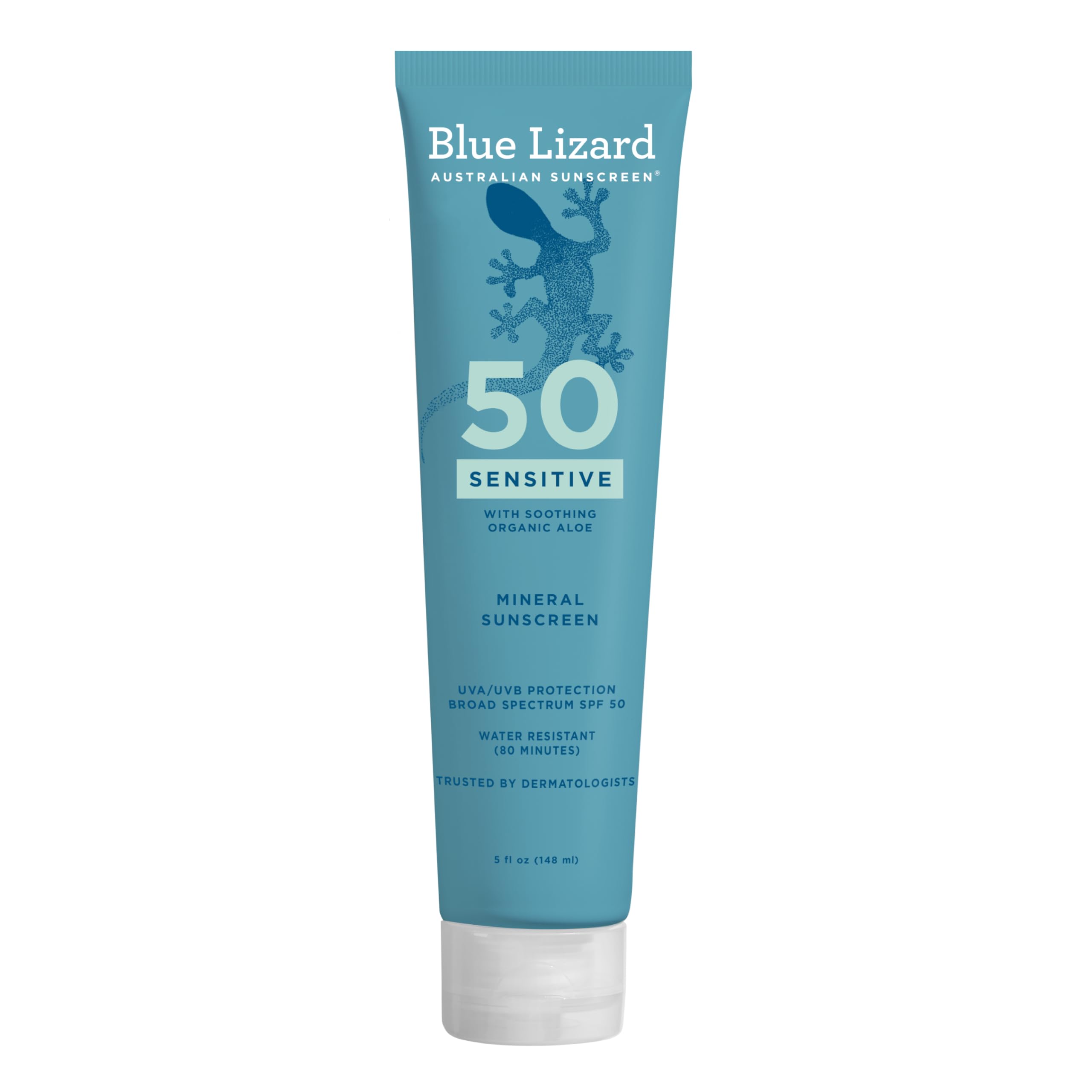
Sensitive Mineral SPF 50 Sunscreen Lotion, 100% Mineral Sunscreen, UVA/UVB
BLUE LIZARD holds a 4.6 star average across 14,188 verified Amazon reviews. Alex Javier wrote: “I really like this sunscreen because it provides excellent protection while using mineral ingredients instead of harsh chemicals. I feel good knowing it doesn’t contain harmful ingredients, especially for everyday use.I…”
- POWERFUL MINERAL SUNSCREEN Protect
- SPF 50 BROAD SPECTRUM PROTECTION The
- FORMULATED FOR SENSITIVE SKIN Developed
- INFUSED WITH ORGANIC ALOE VERA gently
What we like
- POWERFUL MINERAL SUNSCREEN Protect sensitive skin from the sun’s harmful rays with Blue Lizard Sensitive Mineral SPF 50 Sunscreen Lotion…
- SPF 50 BROAD SPECTRUM PROTECTION The water resistant formula provides broad spectrum protection and helps protect skin from up to 98% of…
- FORMULATED FOR SENSITIVE SKIN Developed specifically for sensitive skin, the hypoallergenic formula is also paraben free and…
- INFUSED WITH ORGANIC ALOE VERA gently soothes and moisturizes.
Watch out for
- No common complaints in top verified reviews
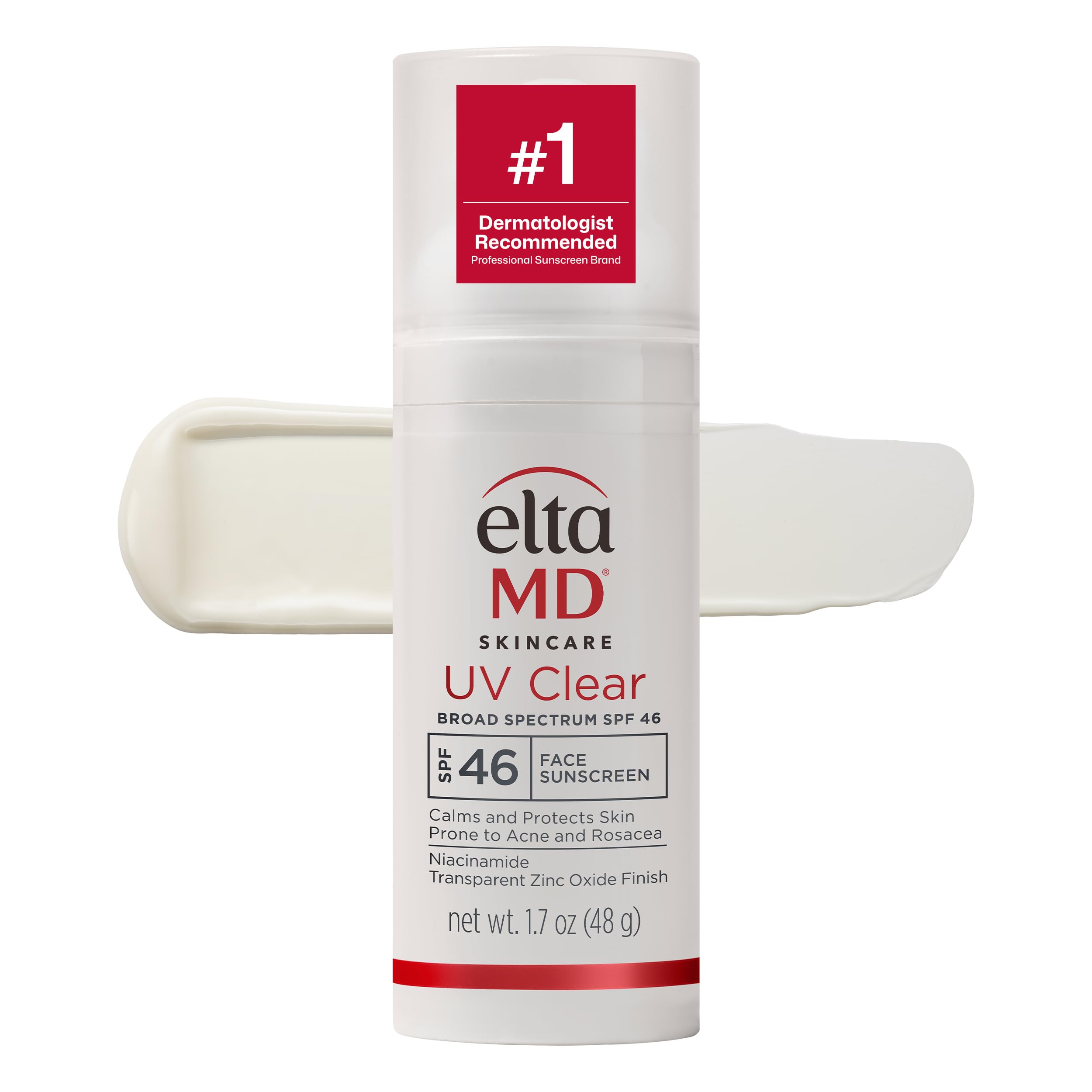
UV Clear Face Sunscreen, Oil Free Sunscreen for Sensitive Skin with Zinc
EltaMD holds a 4.6 star average across 47,384 verified Amazon reviews. jxflyer wrote: “This stuff is worth the price. We use it daily. It goes on clean, not greasy. Smells great and provides excellent sun protection. We’ve used it at the beach on occasion and it protects for several hours.I am exposed to…”
- This lightweight face sunscreen with
- FOR NORMAL
- Contains Niacinamide which helps to
- This face sunscreen is TSA approved and
What we like
- This lightweight face sunscreen with transparent Zinc Oxide provides broad spectrum SPF 46 protection and helps protect normal and…
- FOR NORMAL, ACNE PRONE, AND SENSITIVE SKIN TYPES: UV Clear uses an oil free, non comedogenic formula that’s designed for daily use on…
- Contains Niacinamide which helps to visibly improve skin tone and reduce the appearance of discoloration and blemishes on the skin
- This face sunscreen is TSA approved and comes in a convenient travel size pump bottle that easily fits in handbags, beach bags, and carry…
Watch out for
- No common complaints in top verified reviews
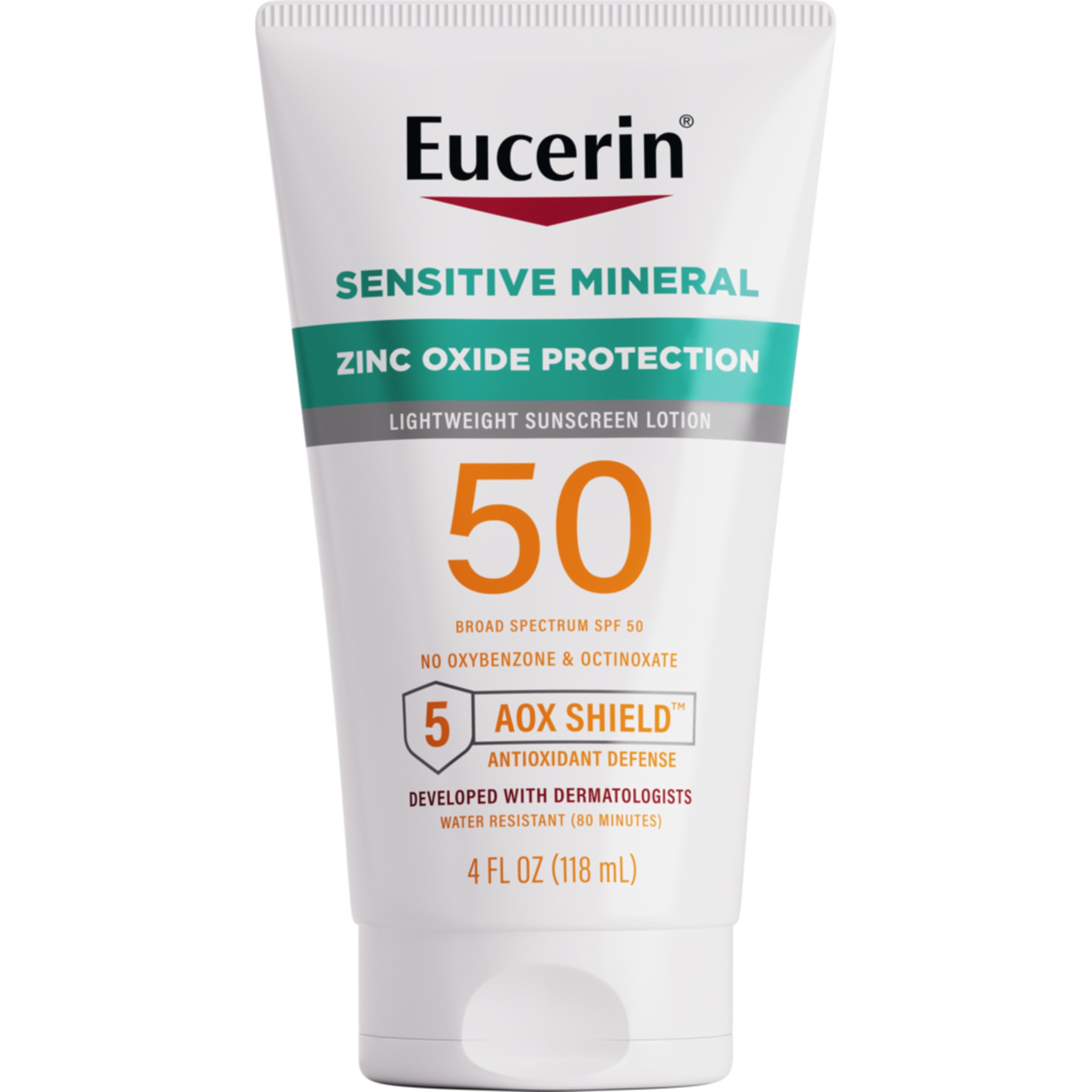
Sun Sensitive Mineral Sunscreen Lotion SPF 50 with Zinc Oxide Protection
Eucerin holds a 4.4 star average across 1,498 verified Amazon reviews. Alvin English wrote: “Eucerin 50 (Sensitive Mineral Zinc Oxide)Expiration date: Sept. 2026Purchase date: May 2025The most noticeable ingredients in the sunscreen are zinc oxide, mineral oil, and a yellow tint. The sunscreen is not scented…”
- Includes one 4 fluid ounce tube of
- This sensitive skin sunscreen body lotion
- Eucerin Sun Sensitive Mineral Sunscreen
- Developed with Dermatologists
What we like
- Includes one 4 fluid ounce tube of Eucerin Sun Sensitive Mineral Sunscreen Lotion SPF 50
- This sensitive skin sunscreen body lotion contains highly effective Broad Spectrum UVA/UVB protection by mineral filters (Naturally…
- Eucerin Sun Sensitive Mineral Sunscreen Lotion has a lightweight texture and leaves an invisible finish with no residue
- Developed with Dermatologists, this non greasy sunscreen is suitable for daily use as a face and body sunscreen and is safe for sensitive…
Watch out for
- No common complaints in top verified reviews
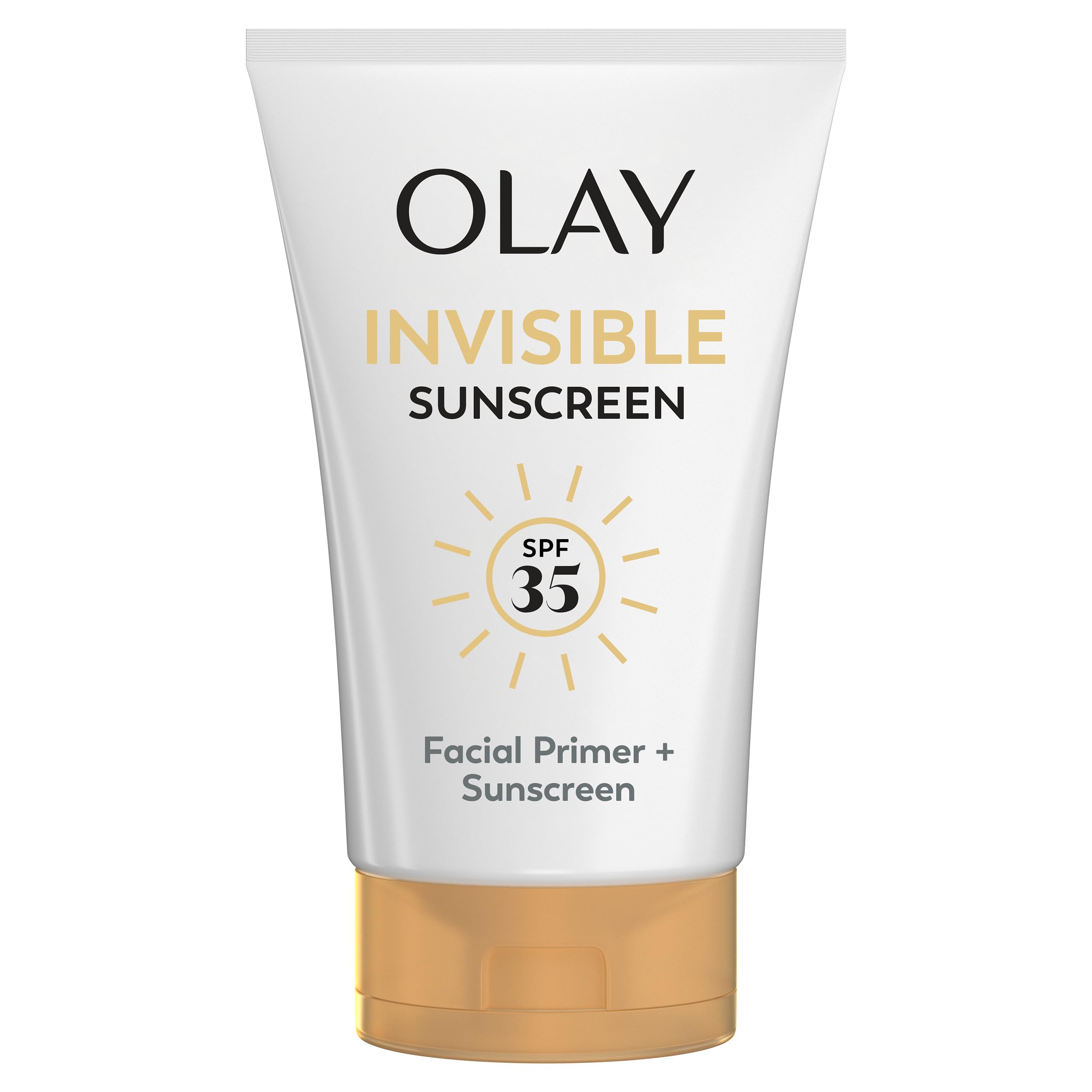
Invisible Sunscreen, SPF 35, 100% Invisible Facial Sunscreen and Makeup
Olay holds a 4.4 star average across 4,146 verified Amazon reviews. Becki Hale wrote: “After trying so many sunscreens that either felt heavy, looked greasy, or ruined my makeup, I was honestly starting to give up until I found the Olay Invisible Sunscreen SPF 35.This one is completely different. It’s so…”
- Olay Invisible Sunscreen protects your
- 2 in 1 face sunscreen and gripping makeup
- Olay’s sunscreen works with all skin
- Non greasy SPF makeup primer that easily
What we like
- Olay Invisible Sunscreen protects your skin against UV rays with a sheer broad spectrum SPF35
- 2 in 1 face sunscreen and gripping makeup primer that works great with your daily makeup routine
- Olay’s sunscreen works with all skin tones and absorbs quickly, leaving no white cast behind
- Non greasy SPF makeup primer that easily melts into your face upon application
Watch out for
- No common complaints in top verified reviews

Anthelios Melt In Milk Sunscreen SPF 100, Sunscreen For Body & Face 3 Fl
La Roche Posay holds a 4.7 star average across 13,304 verified Amazon reviews. Annie wrote: “Excellent. Very faint almost no smell which I love. Absorbs easily, goes on smooth and makes my skin feel soft. I wouldn’t say greasy but has a soft sheen like a lotion would. No white cast. Haven’t tried in the sun yet…”
- This travel size sunscreen is non sealed
- SPF 100 sunscreen for face and body
- Oxybenzone and Octinoxate free sunscreen
- Body & face sunscreen blends easily
What we like
- This travel size sunscreen is non sealed
- SPF 100 sunscreen for face and body, specifically formulated to help protect skin that burns easily.
- Oxybenzone and Octinoxate free sunscreen for body & face helps protect sun sensitive skin and skin prone to burning from UVA (aging) and…
- Body & face sunscreen blends easily without leaving a white cast behind. Facial sunscreen is wearable under makeup. Water resistant up to…
Watch out for
- No common complaints in top verified reviews

Ultra Sheer Dry Touch Sunscreen Lotion SPF 70, Broad Spectrum, Water
Neutrogena holds a 4.6 star average across 36,944 verified Amazon reviews. Kristen wrote: “I'm new to skincare and I didn't know we were supposed to wear sunscreen! 😱 Turns out it's arguably the most important step of skincare.First, I like the texture of this sunscreen. It's not greasy, it's velvety and…”
- SPF 70 broad spectrum sunscreen lotion
- Lightweight
- Oxybenzone free
- Convenient 3 fl oz travel size is TSA
What we like
- SPF 70 broad spectrum sunscreen lotion delivers high UVA/UVB protection for daily use; water resistant for up to 80 minutes to help guard…
- Lightweight, oil free, non comedogenic Dry Touch formula absorbs quickly for most users, leaving an ultra light feel. Finish may vary;…
- Oxybenzone free, Hawaii Act 104 compliant, PABA free body sunscreen; powered by Helioplex technology to provide stable protection against…
- Convenient 3 fl oz travel size is TSA compliant and easy to pack in carry ons, gym bags, or backpacks; a portable sunscreen lotion for…
Watch out for
- Peeling and white cast is terrible, difficult to layer well
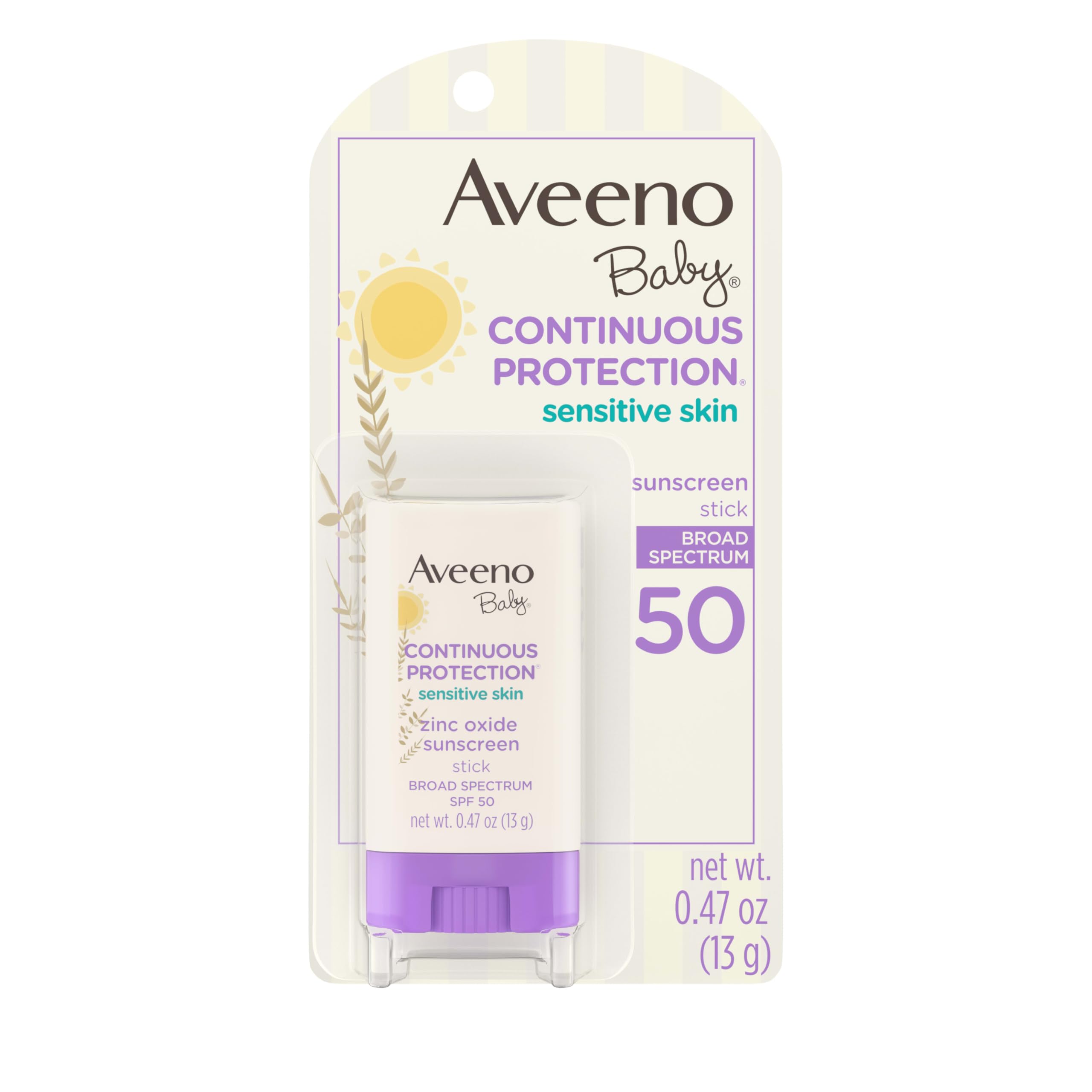
Continuous Protection Mineral Sunscreen Stick for Sensitive Skin with
Aveeno Baby holds a 4.6 star average across 4,664 verified Amazon reviews. Ed wrote: “This product is amazing. I have fairly bad eczema and am a 59 year old woman so I've had it my whole life. My lips have had bad eczema since they were sunburned 4 years ago. I had to let them heal before I could use any…”
- 0
- Great for at the beach
- This SPF 50 sunscreen stick for face and
- From the pediatrician recommended brand
What we like
- 0.47 ounce stick of Aveeno Baby Continuous Protection Sensitive Skin Mineral Sunscreen Stick with Broad Spectrum SPF 50 in a convenient,…
- Great for at the beach, at the park or on the go, this mineral sunscreen face stick for babies glides on easily for no mess application…
- This SPF 50 sunscreen stick for face and body is specially formulated to be gentle and non irritating on baby's delicate skin and is made…
- From the pediatrician recommended brand, this sunscreen stick is fragrance paraben and phthalate free, and is both sweat resistant and…
Watch out for
- My baby developed small blisters after using this product
Frequently Asked Questions
Is mineral or chemical sunscreen better for sensitive skin?
Mineral sunscreens (containing zinc oxide or titanium dioxide) are generally recommended for sensitive skin because they sit on top of the skin and physically deflect UV rays rather than being absorbed. Chemical filters like oxybenzone and avobenzone can cause stinging, redness, or allergic reactions in reactive skin types. However, newer chemical filters like Tinosorb S and Uvinul A Plus are much gentler and may work for moderately sensitive skin without the white cast of mineral formulas.
Why does sunscreen sting my face?
Stinging is most commonly caused by chemical UV filters (especially avobenzone and oxybenzone), alcohol based formulations, or fragrance. If your skin barrier is compromised from retinol use, exfoliation, or dry conditions, even mild ingredients can trigger irritation. Switching to a mineral sunscreen with zinc oxide, free of alcohol and fragrance, usually eliminates the stinging. Also avoid applying sunscreen immediately after exfoliating or using active serums.
How do I avoid white cast from mineral sunscreen?
Look for tinted mineral sunscreens that include iron oxides these blend into most skin tones and actually provide additional protection against visible light. Formulas that use micronized or nano zinc oxide also produce less white cast, though they may be slightly less effective at blocking visible light. Applying the sunscreen in thin, layered coats rather than one thick application also helps it blend more seamlessly.
How much sunscreen should I apply to my face?
Dermatologists recommend approximately 1/4 teaspoon (or a nickel sized amount) for the face and neck. Most people apply only 25 50% of the recommended amount, which dramatically reduces the effective SPF an SPF 50 applied at half thickness delivers roughly SPF 7. Reapply every two hours during continuous sun exposure, or immediately after swimming, sweating, or toweling off.
Can I skip sunscreen on cloudy days?
No. Up to 80% of UV radiation penetrates cloud cover, meaning you can still experience significant sun damage on overcast days. UVA rays which cause premature aging and contribute to skin cancer are especially consistent regardless of cloud coverage. Dermatologists recommend wearing at least SPF 30 every day you will be outdoors for more than 15 minutes, regardless of weather conditions.
The Bottom Line
For truly sensitive skin, a fragrance free mineral sunscreen with zinc oxide is the safest starting point. Modern formulations have largely solved the white cast problem through micronized particles and tinted options. SPF 30 to 50 broad spectrum coverage is the sweet spot, high enough to protect effectively, without the heavy texture and potential irritants that come with ultra high SPF formulas.
The most important factor is not the SPF number on the bottle, it is whether you actually enjoy wearing the sunscreen enough to apply it consistently every day. A sunscreen you love at SPF 30 protects far better in practice than an SPF 100 that sits in your medicine cabinet. Explore more of our beauty and personal care picks for products that are gentle enough for reactive skin.
Opens your browser's print dialog. Choose Save as PDF as the destination.
People also search for
- BS MALL vs LULUCOLORS Makeup Brushe
- Aquasonic vs Oral B Buying Guide
- CeraVe vs Cetaphil Face Moisturizer
- best buying guide for everyday use
- best nail lamp for gel nails
- Best Skincare for Summer: Lightweight SPF, Moisturizers, and Essentials
- Best Face Moisturizers for Dry Skin: Dermatologist Recommended
- Best Electric Toothbrushes 2026: Dentist Recommended Picks