Dry skin is not just uncomfortable, it accelerates fine lines, dulls your complexion, and makes makeup sit unevenly. The right moisturizer does more than temporarily relieve tightness: it rebuilds your skin barrier with ceramides, pulls water into the epidermis with humectants like hyaluronic acid, and locks everything in with occlusives. We compared over 20 face moisturizers, from drugstore staples to dermatologist recommended clinical brands, testing each on hydration longevity, texture, ingredient quality, and compatibility with sensitive skin.
Finding the right moisturizer is only one piece of a complete skincare routine. If you are battling dry skin, proper oral hydration matters too, check out our picks for the best water bottles to keep intake consistent throughout the day. For storing your serums and creams at optimal temperatures, our skincare fridge guide covers what actually works. And do not neglect your smile, see our electric toothbrush picks for a complete personal care upgrade.

Face Moisturizer, Daily Oil Free Facial Moisturizer with SPF 35, For Dry
Cetaphil holds a 4.5 star average across 13,225 verified Amazon reviews. Denecia wrote: “I’ve been using Cetaphil Daily Facial Moisturizer SPF 15 and it’s honestly one of the easiest products to keep in my routine.It’s super lightweight, absorbs quickly, and doesn’t leave my skin feeling greasy at all. I…”
- Cetaphil Daily Facial Moisturizer SPF 35
- Daily SPF Protection
- Long Lasting Hydration
- Fast Absorbing
What we like
- Cetaphil Daily Facial Moisturizer SPF 35: Three in one facial moisturizer hydrates, nourishes and protects sensitive, combination skin
- Daily SPF Protection: Broad spectrum SPF 35 protects against damaging UVA and UVB rays
- Long Lasting Hydration: Edelweiss flower extract nourishes to repair the skin barrier
- Fast Absorbing, Lightweight Formula: Non greasy, fragrance free and paraben free formula won't clog pores
Watch out for
- I really like the moisturizer itself it feels great on my skin and absorbs well

AM Facial Moisturizing Lotion with SPF 30, Oil Free Face Moisturizer with
CeraVe holds a 4.5 star average across 96,413 verified Amazon reviews. Caroline wrote: “I just received this product today and tried it right away, and so far I am really impressed.The texture is lightweight and easy to apply. It spreads smoothly on the skin and absorbs quickly without feeling greasy or…”
- A micro fine zinc oxide sunscreen for
- Use this daily face sunscreen as the last
- Contains Hyaluronic Acid to retain skin's
- Ceramides are found naturally in the skin
What we like
- A micro fine zinc oxide sunscreen for UVA/UVB protection. This CeraVe moisturizer with SPF is a hydrating facial lotion that spreads…
- Use this daily face sunscreen as the last step in a morning skincare routine. If layering with an eye cream, moisturizer or facial serum,…
- Contains Hyaluronic Acid to retain skin's moisture and Niacinamide to help calm skin. MVE Technology delivers hydration throughout the day
- Ceramides are found naturally in the skin and make up 50% of the lipids in the skin barrier. All CeraVe products are formulated with three…
Watch out for
- I really wanted to love this because the regular CeraVe moisturizer without SPF works amazing for my skin
- The cream was delivered used

Face Moisturizer, Gentle Clear Mattifying Acne Moisturizer With 0.5%
Cetaphil holds a 4.6 star average across 10,382 verified Amazon reviews. Imani Gray wrote: “This product with every pennyI’ve been using the Cetaphil Complexion Clearing Acne Cleanser for a little while now, and I’m honestly impressed with the results. My skin is usually sensitive, so I was worried about…”
- Lightweight
- Balanced formula contains botanicals and
- Contains gentle yet effective
- FRAGRANCE FREE
What we like
- Lightweight, fast absorbing face lotion hydrates for 48 hours, while treating and preventing breakouts in sensitive skin
- Balanced formula contains botanicals and prebiotic complex to help nourish skin and soothe the appearance of acne redness and alleviate…
- Contains gentle yet effective.5% Salicylic Acid acne treatment to clear and prevent future breakouts. Helps to treat and prevent acne…
- FRAGRANCE FREE, NON COMEDOGENIC AND HYPOALLERGENIC: Clinically developed and tested to be gentle on sensitive skin
Watch out for
- I have a very oily skin on my T zone
- Wouldn't say served the purpose

Ultra Light Moisturizing Gel, Hydrating Gel Face Moisturizer For Men & For
CeraVe holds a 4.7 star average across 4,589 verified Amazon reviews. Michael wrote: “I got a free sample of the CeraVe Ultra Light Moisturizing Gel and ended up liking it enough to buy the full size on Amazon. The texture is light, absorbs quickly, and doesn’t leave any greasy feeling. My skin just…”
- Water based moisturizer for face with 3
- This hydrating face moisturizer gel
- Suitable for use on face and neck
- Ceramides are found naturally in the skin
What we like
- Water based moisturizer for face with 3 essential ceramides, niacinamide, and hyaluronic acid for immediate and long lasting hydration…
- This hydrating face moisturizer gel delivers powerful ingredients in a refreshing lightweight texture that is fast absorbing and…
- Suitable for use on face and neck. This daily face moisturizer can be applied in the morning and night. Hydrating moisturizer layers well…
- Ceramides are found naturally in the skin and can become damaged with sun exposure. All CeraVe products are formulated with three…
Watch out for
- No common complaints in top verified reviews
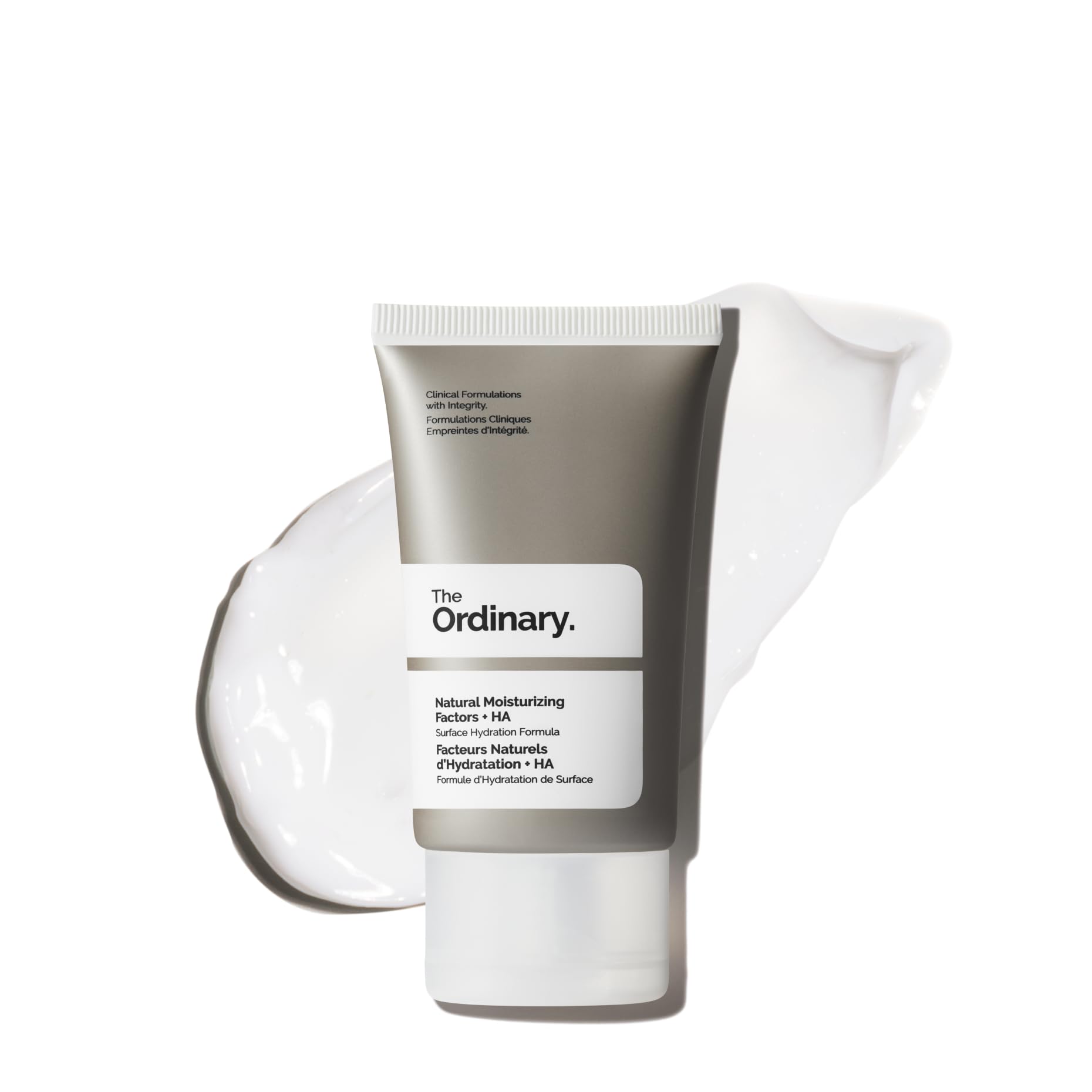
Natural Moisturizing Factors + Hyaluronic Acid, Lightweight Hydrator for
The Ordinary holds a 4.6 star average across 22,536 verified Amazon reviews. Charlie Price wrote: “The Ordinary Natural Moisturizing Factors + HA is one of those skincare products that quietly becomes indispensable once you start using it. The lightweight, non greasy formula absorbs quickly and provides lasting…”
- This lightweight formula keeps the outer
- Natural Moisturizing Factors + HA works
- Formulated with amino acids
- Provides both immediate hydration and
What we like
- This lightweight formula keeps the outer layer of your skin protected and hydrated without feeling greasy.
- Natural Moisturizing Factors + HA works with your skin to enhance its natural hydration barrier. Accepted by the National Eczema…
- Formulated with amino acids, fatty acids, ceramides, urea, and hyaluronic acid to hydrate and protect the skin.
- Provides both immediate hydration and long term improvements to the skin barrier with regular use.
Watch out for
- No common complaints in top verified reviews

L’Oreal Paris Collagen Daily Face Moisturizer, Anti Aging Face Cream to
L'Oreal Paris holds a 4.6 star average across 54,082 verified Amazon reviews. anniehall wrote: “This lovely cream is all I need to keep my skin bright, firm, and perfectly moisturized. It goes on easily and quickly absorbs into my skin, keeping moisture in all night long or ready for makeup application in the a.m,…”
- Day and night face and chest cream
- This lightweight
- Proven results
- Replenish skin with Collagen
What we like
- Day and night face and chest cream: provides skin with a daily dose of intense hydration that helps to fill in the appearance of lines and…
- This lightweight, non greasy moisturizer delivers hydration and moisture to all skin types, including sensitive skin and absorbs quickly…
- Proven results: Overnight, skin is nourished with moisture; In 1 week of using this face moisturizer skin feels smoother and in 4 weeks of…
- Replenish skin with Collagen: Gift your skin a daily dose of hydration from L'Oreal Paris anti aging skin care, whether face lotion, night…
Watch out for
- No common complaints in top verified reviews
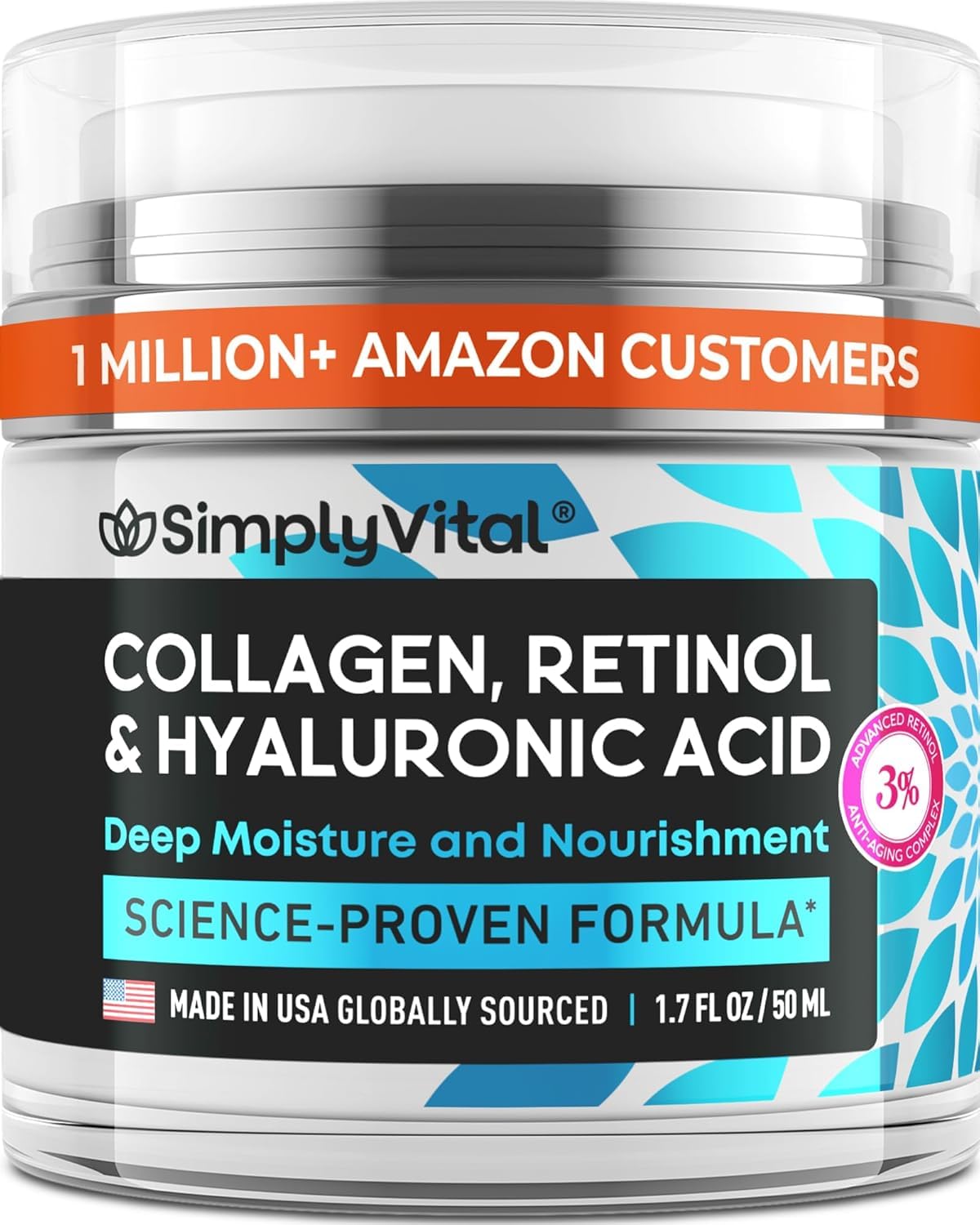
Anti Aging Face Moisturizer with Retinol, Collagen & Hyaluronic Acid
SimplyVital holds a 4.4 star average across 34,681 verified Amazon reviews. Belinda80 wrote: “This is a nice product to use. I like the way it is dispensed without getting too much at once. The texture is very creamy and the product provides a slight cooling affect. Feels really nice going on.”
- Nourishing Face Moisturizer Enhance
- How to Use Apply a small amount to clean
- Advanced Retinol Face Cream Formulated
- Proudly Made in the USA SimplyVital
What we like
- Nourishing Face Moisturizer Enhance your anti aging skincare routine with this moisturizing face cream and facial moisturizer, designed…
- How to Use Apply a small amount to clean, dry skin, massaging until absorbed. Start 1 2 times a week for sensitive skin, then increase…
- Advanced Retinol Face Cream Formulated with a balanced concentration of retinol, this moisturizer encourages skin renewal for a…
- Proudly Made in the USA SimplyVital guarantees exceptional quality in each jar. We carefully select effective yet gentle components to…
Watch out for
- I’ve used this product several times but the last one that I received definitely has an unpleasant odor to it
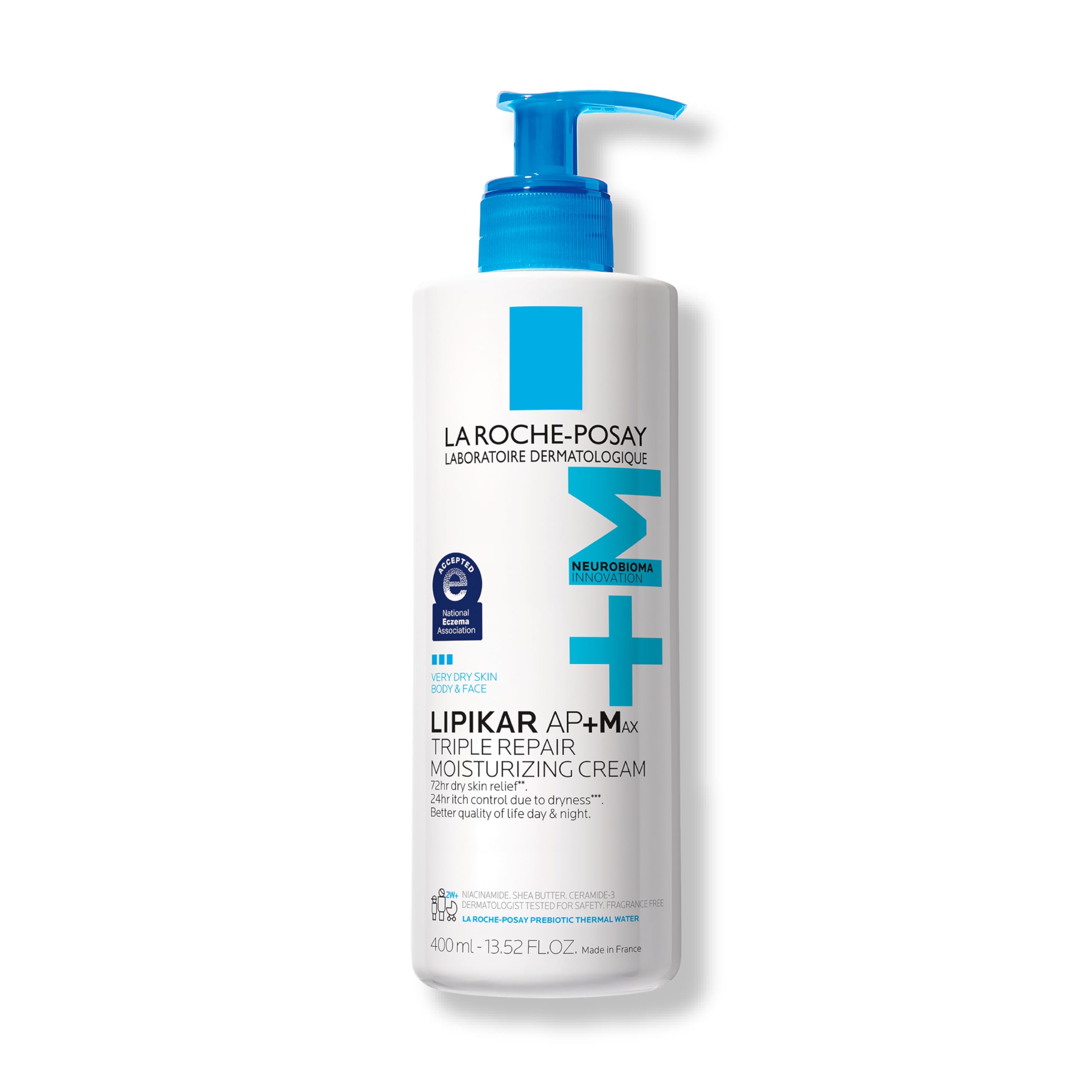
Lipikar AP+MAX Triple Repair Moisturizing Body Cream | Face & Body Lotion
La Roche Posay holds a 4.6 star average across 39,965 verified Amazon reviews. Nayla wrote: “I’ve been using this La Roche Posay face cream for a while now, and I’m genuinely impressed with the results! This moisturizer has a lightweight, non greasy texture that absorbs quickly into my skin without leaving any…”
- Clinically Shown Relief for Dry Skin
- Hydrating Body Lotion for Sensitive Skin
- Ceramide Moisturizer with Nourishing
- Sensitive Skin Lotion for Babies & Adults
What we like
- Clinically Shown Relief for Dry Skin: Alleviates extra dry skin with 72 hour dry skin relief** and 24 hour itch control due to dryness***.…
- Hydrating Body Lotion for Sensitive Skin: Provides long lasting 48 hour hydration and replenishes essential lipids to restore the skin's…
- Ceramide Moisturizer with Nourishing Ingredients: Features ceramides, shea butter, glycerin, and niacinamide, combined with Neurobioma…
- Sensitive Skin Lotion for Babies & Adults: Dermatologist and pediatrician tested for safety, safe for babies as young as two weeks.…
Watch out for
- No common complaints in top verified reviews

Daily Facial Moisturizer With Ceramides and Hyaluronic Acid Formulated
Vanicream holds a 4.6 star average across 23,441 verified Amazon reviews. AimeeP wrote: “I have extremely sensitive skin, rosacea, and recently developed seborrheic dermatitis in spots with this terribly dry and cold winter in the northeast. I’ve been using this daily for a few weeks and my skin is…”
- Vanicream is the #1 Dermatologist
- Sensitive moisturizer
- Mild formula
- No common chemical irritants
What we like
- Vanicream is the #1 Dermatologist recommended Brand for Sensitive Skin: Source IQVIA ProVoice Survey, 12 months ending July 2024
- Sensitive moisturizer: Vanicream fragrance free daily face moisturizer is a lightweight, gluten free moisturizer for sensitive skin
- Mild formula: This unscented, hydrating moisturizer is formulated with 5 key ceramides, hyaluronic acid, squalane and glycerin;…
- No common chemical irritants: Our products are free of dyes, fragrance, masking fragrance, lanolin, parabens and formaldehyde releasers
Watch out for
- No common complaints in top verified reviews

Daily Moisturizing Lotion for Dry Skin, Body Lotion & Face Moisturizer
CeraVe holds a 4.7 star average across 145,302 verified Amazon reviews. An Amazon customer wrote: “I really love this as a hand lotion!I haven't used it for a body lotion, but have used the cream type that comes in the tub for the body and that worked well, too.This lotion is lightweight and absorbs almost instantly!…”
- Smooth
- Contains Hyaluronic Acid to help retain
- Holds National Eczema Association (NEA)
- Ceramides are found naturally in the skin
What we like
- Smooth, light weight texture that is absorbed quickly, leaving skin feeling smooth and hydrated, never greasy
- Contains Hyaluronic Acid to help retain skins natural moisture and MVE technology to provide 24 hour hydration
- Holds National Eczema Association (NEA) Seal of Acceptance. Fragrance free, allergy tested, non comedogenic, and suitable for use as a…
- Ceramides are found naturally in the skin and make up 50% of the lipids in the skin barrier. All CeraVe products are formulated with three…
Watch out for
- No common complaints in top verified reviews
Frequently Asked Questions
What ingredients should I look for in a moisturizer for dry skin?
The most effective moisturizers for dry skin contain a combination of humectants, emollients, and occlusives. Hyaluronic acid and glycerin are humectants that pull water into the skin. Ceramides and squalane are emollients that repair the skin barrier. Shea butter and petrolatum are occlusives that lock moisture in. A product with ingredients from all three categories will hydrate better than one relying on a single mechanism.
Should I use a cream or lotion for very dry skin?
Creams are better for very dry skin because they have a higher oil to water ratio than lotions, providing a thicker barrier against moisture loss. Lotions absorb quickly but may not provide enough occlusion for severely dry or flaky skin. If your skin still feels tight after applying a lotion, switch to a cream or layer a thin lotion under a heavier cream for maximum hydration without greasiness.
How often should I moisturize dry skin on my face?
Dermatologists recommend moisturizing at least twice daily once in the morning and once before bed. The most effective time to apply is within 60 seconds of washing your face, while the skin is still slightly damp, which helps trap water in the outermost layer. In harsh winter conditions or very dry climates, you may benefit from a midday reapplication, especially on areas prone to flaking like the cheeks and around the nose.
Can a moisturizer replace a serum for dry skin?
They serve different functions and work best together. Serums deliver concentrated active ingredients like hyaluronic acid or niacinamide in lightweight formulas that penetrate deeper into the skin. Moisturizers sit on top to seal those actives in and prevent transepidermal water loss. Skipping serum means your moisturizer has to do double duty, and skipping moisturizer means your serum evaporates before it can fully work.
Is fragrance free moisturizer really important for dry skin?
Yes, especially if your dry skin is also sensitive or prone to eczema. Fragrances both synthetic and natural are among the most common causes of contact dermatitis and can further compromise an already weakened skin barrier. The National Eczema Association recommends fragrance free products for anyone with dry or reactive skin. Note that "unscented" is not the same as "fragrance free" unscented products may contain masking fragrances.
The Bottom Line
The best moisturizer for dry skin repairs your barrier while locking in hydration, look for formulas that combine ceramides with hyaluronic acid and an occlusive like dimethicone or shea butter. Drugstore options from CeraVe and Vanicream consistently match or outperform products costing five times as much in clinical hydration tests.
Apply your moisturizer within 60 seconds of washing your face to trap water in the skin, and use a richer cream formula at night when your skin does its heaviest repair work. For the rest of your skincare routine, explore our beauty and personal care guides covering everything from hair dryers to skincare fridges.
Opens your browser's print dialog. Choose Save as PDF as the destination.
People also search for
- BS MALL vs LULUCOLORS Makeup Brushe
- Aquasonic vs Oral B Buying Guide
- JODSONE vs SUNUV Nail Lamp
- best buying guide for everyday use
- best nail lamp for gel nails
- Best Sunscreens for Sensitive Skin: No Irritation, No White Cast
- Best Budget Self Care Gifts: Thoughtful Picks They'll Actually Use
- Best Skincare for Summer: Lightweight SPF, Moisturizers, and Essentials